
How AI Is Transforming Digital Marketing Artificial Intelligence (AI) is no longer an experimental technology in digital marketing—it is the foundation of modern marketing ecosystems. From hyper-personalized customer journeys and predictive analytics to intelligent automation and real-time campaign optimization, AI has fundamentally reshaped how brands acquire, engage, convert, and retain customers at scale.
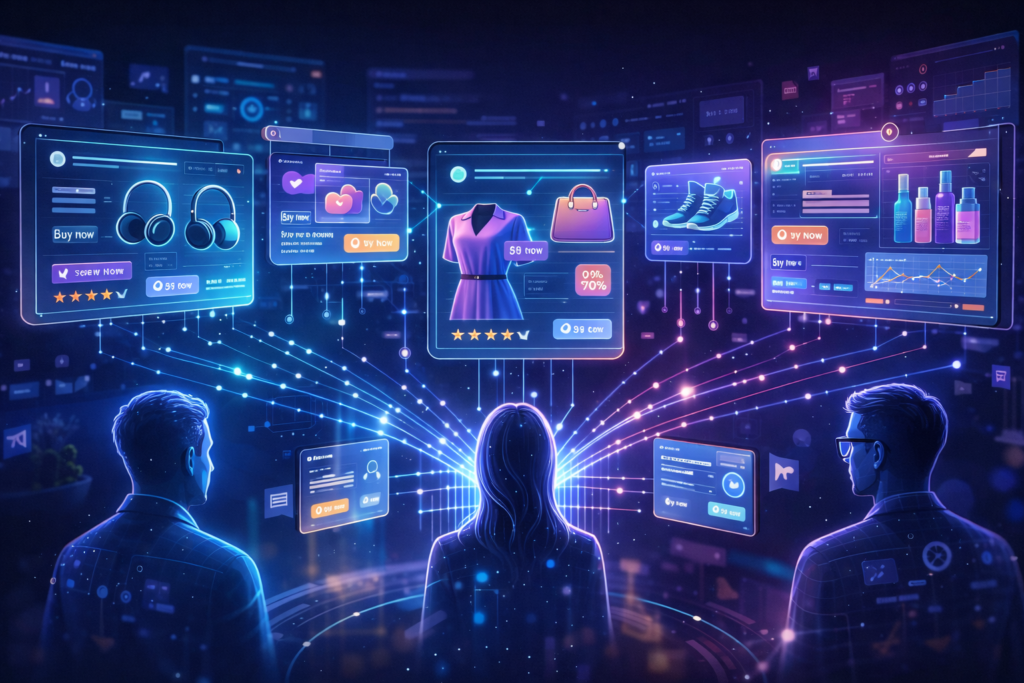
In 2026, successful digital marketing is powered by machine learning models that analyze massive datasets, predict consumer intent, automate execution, and continuously optimize performance across every touchpoint. Businesses that embrace AI-driven marketing outperform competitors in customer experience, operational efficiency, and return on investment (ROI).
This comprehensive guide explores how AI is transforming digital marketing, the technologies driving this transformation, real-world applications, benefits, challenges, and how businesses can implement AI successfully for long-term growth.
Understanding Artificial Intelligence in Digital Marketing
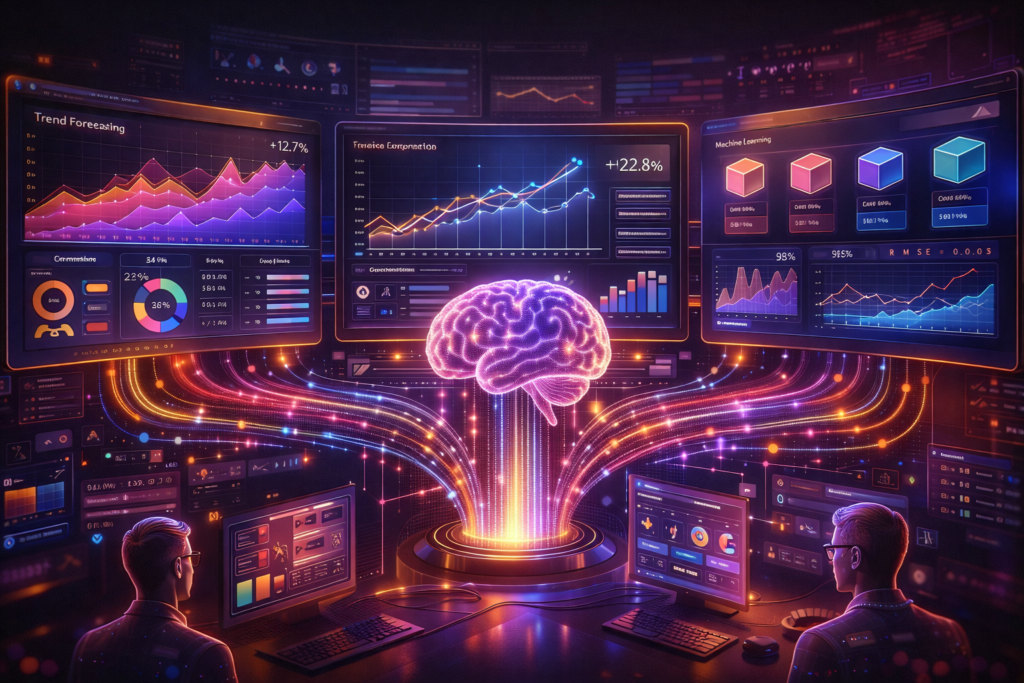
Artificial Intelligence refers to machines and software systems that simulate human intelligence, enabling them to learn, reason, analyze data, recognize patterns, and make autonomous decisions. In marketing, AI combines machine learning, natural language processing (NLP), predictive analytics, and automation to optimize customer engagement and business outcomes.
Core AI Technologies Powering Digital Marketing
Machine Learning (ML)
Machine learning algorithms analyze historical and real-time data to identify patterns and continuously improve predictions. ML drives recommendation engines, ad optimization, fraud detection, and audience segmentation.
Natural Language Processing (NLP)
NLP allows systems to understand, generate, and interpret human language. It powers chatbots, voice search optimization, sentiment analysis, content generation, and conversational marketing.
Computer Vision
AI systems analyze images and videos to recognize objects, emotions, and behaviors. This supports visual search, image-based advertising, creative optimization, and social media analytics.
Predictive Analytics
AI models forecast future outcomes based on historical behavior, enabling proactive marketing strategies instead of reactive decision-making.
Why AI Has Become Essential for Digital Marketing in 2026
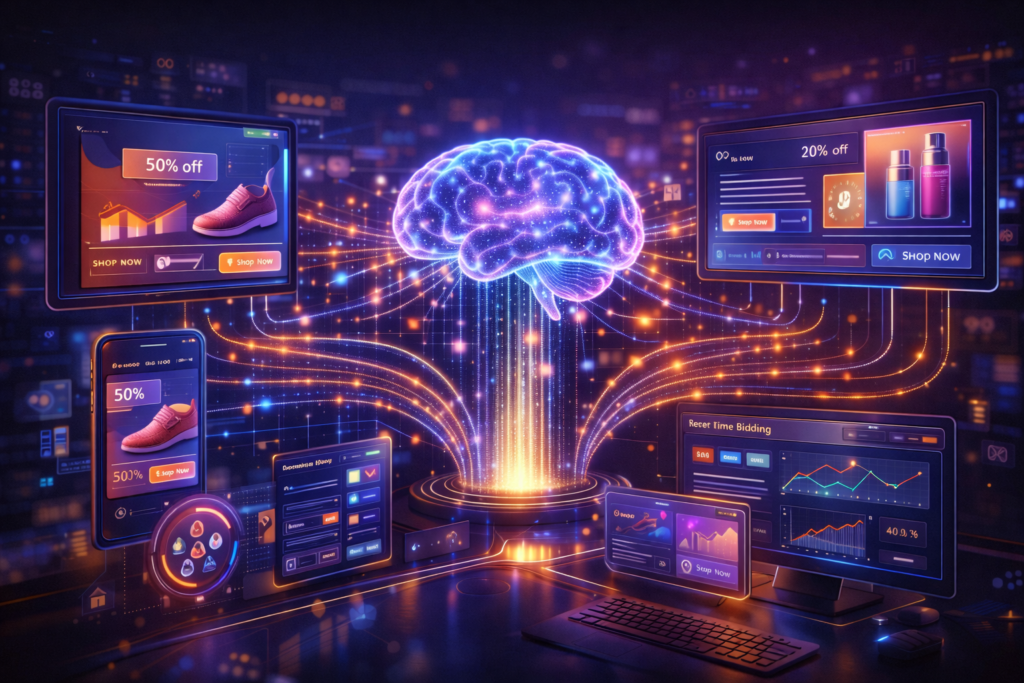
Modern consumers interact with brands across dozens of digital touchpoints—search engines, social media, mobile apps, email, messaging platforms, marketplaces, and physical stores. Managing this complexity manually is impossible at scale.
AI solves this challenge by delivering:
- Real-time personalization across channels
- Automated execution at enterprise scale
- Continuous optimization based on live performance data
- Deeper insights into customer intent and behavior
- Faster experimentation and innovation cycles
Brands that fail to adopt AI-driven marketing face declining efficiency, rising acquisition costs, and poor customer experience.
Hyper-Personalization at Scale
Personalization has evolved from basic name insertion in emails to fully dynamic, individualized customer experiences powered by AI.
How AI Enables Hyper-Personalization
AI systems analyze thousands of data points, including:
- Browsing history
- Purchase behavior
- Demographics
- Location
- Device usage
- Content engagement
- Time of interaction
- Price sensitivity
- Brand affinity
Using this data, AI dynamically customizes:
- Website content
- Product recommendations
- Email campaigns
- Push notifications
- Ad creatives
- Landing pages
- Offers and pricing
Each user receives a unique experience optimized for their preferences and intent.
Benefits of Hyper-Personalization
- Higher engagement rates
- Increased conversion rates
- Improved customer satisfaction
- Stronger brand loyalty
- Higher lifetime value (LTV)
- Reduced churn
Customers increasingly expect brands to understand their needs without repeating information or navigating irrelevant content.
Predictive Analytics and Data-Driven Decision Making
Predictive analytics transforms raw data into actionable intelligence, enabling marketers to anticipate customer behavior rather than react to it.
Key Predictive Applications in Marketing
Automated Content Creation and Creative Optimization
AI dramatically accelerates content production while improving relevance and performance.
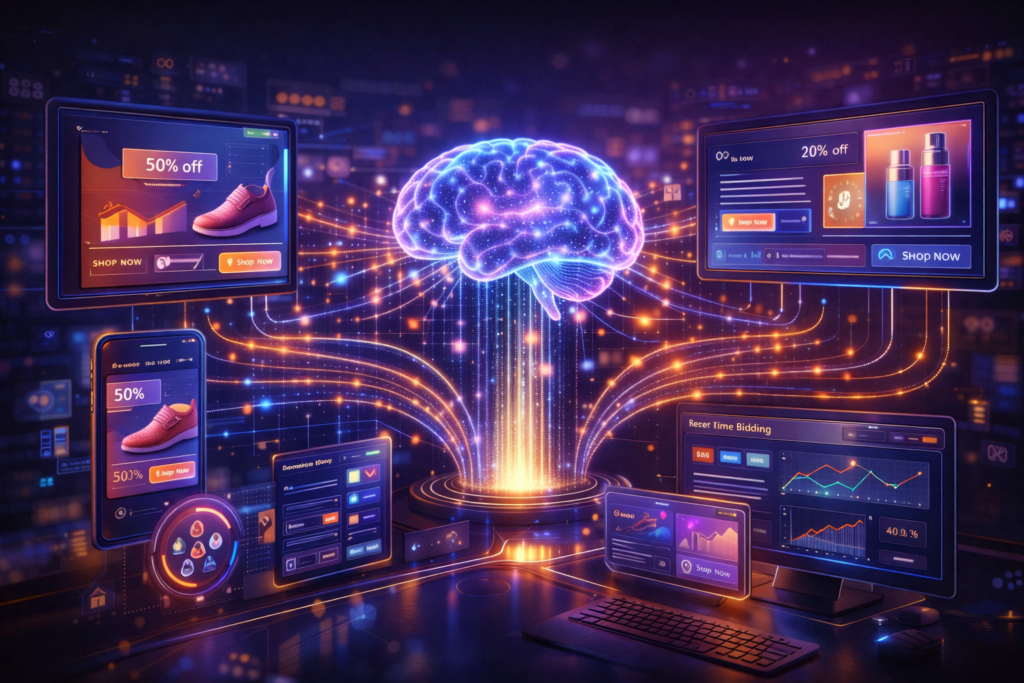
Types of AI-Generated Content
- Blog drafts and outlines
- Ad copy and headlines
- Email subject lines
- Product descriptions
- Social media captions
- Video scripts
- Image generation
- Landing page variations
AI tools analyze high-performing content patterns to generate optimized creative assets at scale.
Human + AI Collaboration Model
AI does not replace human creativity. Instead, it:
- Handles repetitive writing tasks
- Provides data-backed optimization
- Accelerates experimentation
- Enhances ideation
Human marketers focus on strategy, storytelling, brand voice, and ethical judgment.
Smarter Advertising and Programmatic Media Buying
AI powers modern advertising platforms by automating bidding, targeting, and creative optimization.How AI Optimizes Advertising
- Real-time bid optimization
- Audience expansion modeling
- Dynamic creative personalization
- Fraud detection
- Budget pacing
- Attribution modeling
Programmatic advertising systems purchase ad inventory automatically across multiple platforms based on predictive perBenefits of AI-Powered Advertising
- Higher ROAS
- Lower cost per acquisition
- Faster scaling
- Reduced manual management
- Improved audience targeting
- Creative performance optimization
AI ensures ads reach the right user at the right time with the right message.
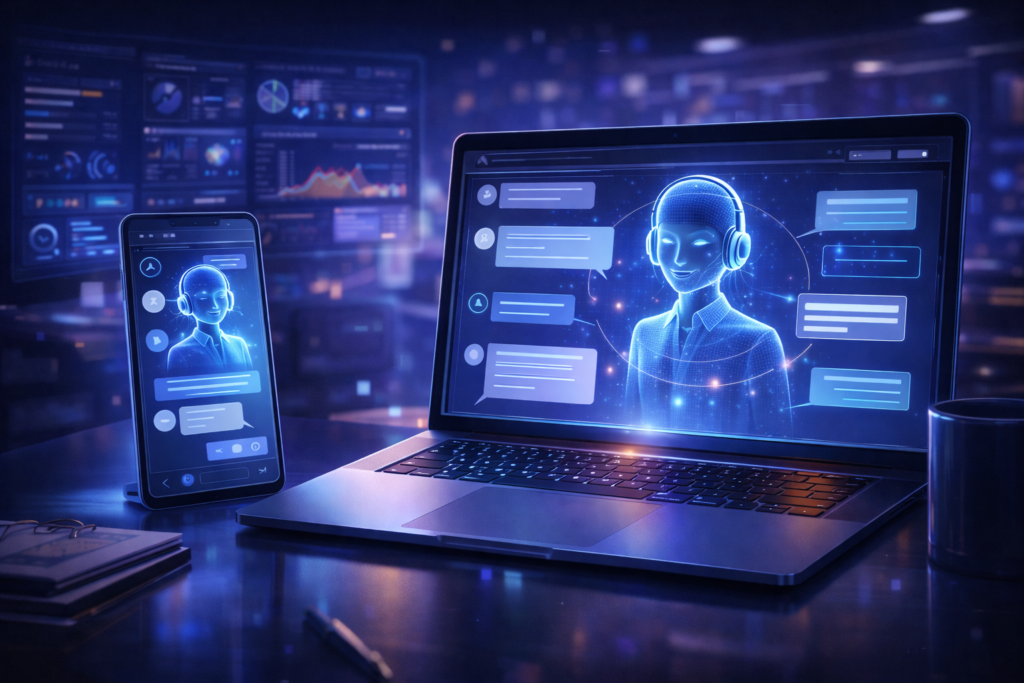
Enhanced Customer Service Through AI Chatbots
AI-powered conversational agents provide instant, scalable customer support across channels.
Capabilities of Modern Chatbots
- Natural language understanding
- Context awareness
- Multilingual support
- Sentiment detection
- CRM integration
- Payment processing
- Order tracking
- Lead qualification
Chatbots operate 24/7 and handle high volumes without human interBusiness Advantages
- Reduced support costs
- Faster response times
- Higher customer satisfaction
- Improved lead conversion
- Scalable operations
Hybrid human-AI support models deliver optimal efficiency and experience.
H2: AI-Driven SEO and Search Optimization
Search engines increasingly rely on AI to interpret user intent, evaluate content quality, and rank pages dynamically.
H3: How AI Improves SEO Performance
- Keyword discovery and clustering
- Content gap analysis
- Search intent mapping
- Featured snippet optimization
- Semantic optimization
- Voice search optimization
- Predictive ranking analysis
- Automated internal linking
AI tools continuously adapt SEO strategies based on algorithm changes and competitor movements.
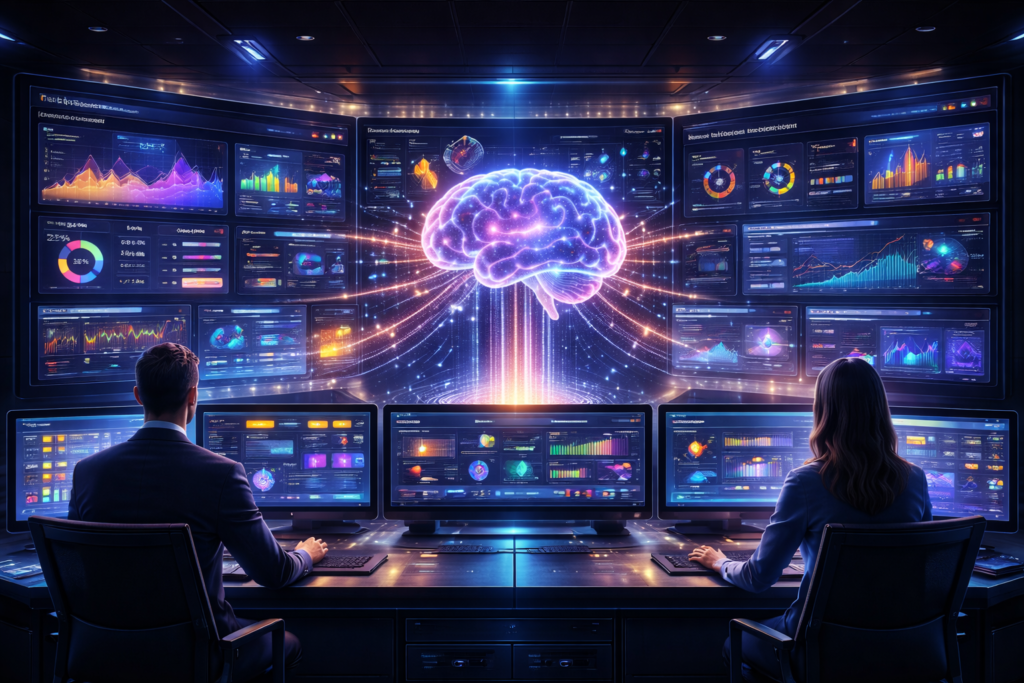
AI-Driven SEO and Search Optimization
Search engines increasingly rely on AI to interpret user intent, evaluate content quality, and rank pages dynamically.
How AI Improves SEO Performance
- Keyword discovery and clustering
- Content gap analysis
- Search intent mapping
- Featured snippet optimization
- Semantic optimization
- Voice search optimization
- Predictive ranking analysis
- Automated internal linking
AI tools continuously adapt SEO strategies based on algorithm changes and competitor movements.
Impact on Organic Growth
- Higher search visibility
- Improved content relevance
- Faster indexing
- Better click-through rates
- Long-term ranking stability
AI-driven SEO transforms organic marketing into a scalable growth engine.
Conclusion
AI is transforming digital marketing by enabling hyper-personalization, predictive intelligence, automated execution, and real-time optimization. Businesses that strategically adopt AI gain measurable advantages in growth, efficiency, and customer satisfaction.
The future belongs to brands that combine human creativity with machine intelligence to deliver meaningful, personalized, and scalable experiences.
Frequently Asked Questions (FAQ)
Is AI replacing marketers?
No. AI augments marketers by automating execution and enhancing insights.
Is AI expensive to implement?
Costs vary, but ROI typically exceeds investment when properly implemented.
Can small businesses use AI marketing tools?
Yes. Many affordable SaaS platforms provide enterprise-grade AI capabilities.