
Choosing the right ecommerce platform is one of the most important decisions for online businesses. Understanding Commerce Cloud pricing helps organizations forecast budgets, calculate return on investment, and select the best platform for scalability and long-term growth. Many businesses struggle with hidden costs, complex licensing models, and unpredictable ecommerce cloud pricing structures..

In this comprehensive guide, we explain everything about Commerce Cloud pricing, including subscription costs, transaction fees, enterprise ecommerce pricing models, implementation expenses, and how platforms like Salesforce Commerce Cloud pricing and Adobe Commerce Cloud pricing compare. If you’re planning to launch or scale an ecommerce business, this guide will help you make an informed decision.
What Is Commerce Cloud Pricing?
Commerce Cloud pricing refers to the cost structure associated with cloud-based ecommerce platforms that provide hosting, security, scalability, and advanced features in one package. Unlike traditional self-hosted ecommerce systems, cloud ecommerce platform pricing includes infrastructure, maintenance, updates, and support.
Common components of ecommerce cloud pricing include:
- Platform subscription fees
- Cloud hosting cost for ecommerce
- Transaction or revenue-based fees
- Add-on features and integrations
- Implementation and customization costs
Understanding these components ensures better budgeting and forecasting.
How Commerce Cloud Pricing Models Work
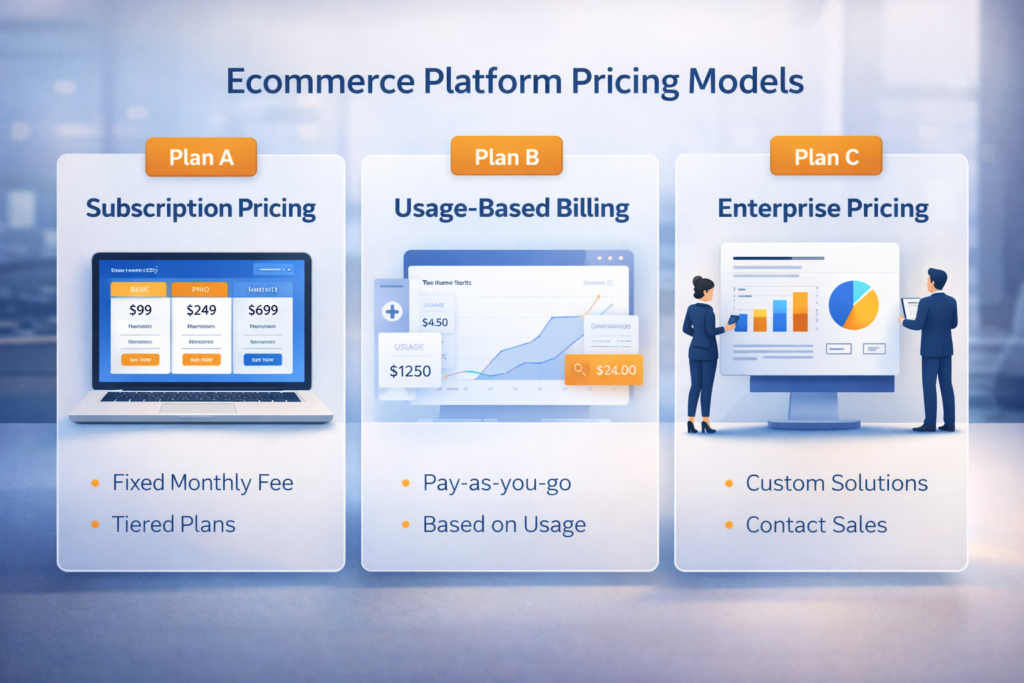
Different vendors apply unique pricing structures. Knowing these models helps businesses compare ecommerce platform pricing accurately.
Subscription-Based Priceing
Subscription-Based Pricing
Fixed monthly or annual pricing based on features and user limits.
Best for: Small and mid-sized businesses.
Revenue Share Pricing
A percentage of your ecommerce revenue is charged in addition to platform fees.
Best for: High-growth ecommerce brands.
Usage-Based Pricing
Pricing depends on traffic, bandwidth, storage, and API usage.
Best for: Seasonal or high-traffic stores.
Enterprise Custom Pricing
Custom contracts for large organizations requiring advanced security, scalability, and integrations.
Best for: Enterprise ecommerce pricing requirements.
Salesforce Commerce Cloud Pricing Explained
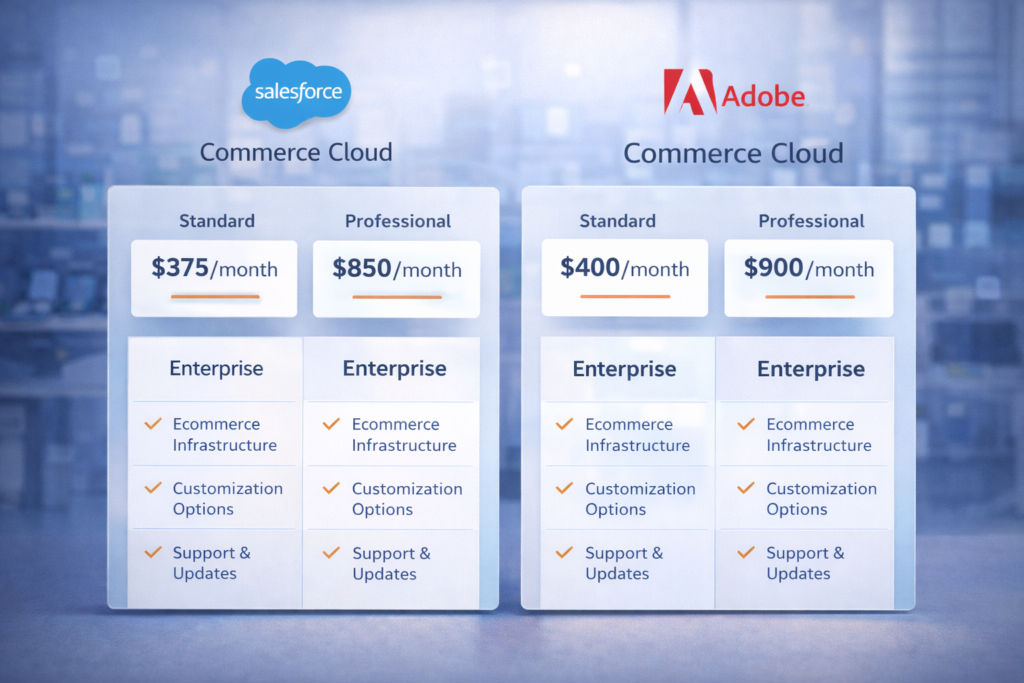
Salesforce Commerce Cloud pricing typically follows a revenue-share model combined with platform licensing fees. It includes:
Cloud hosting and scalability
AI personalization tools
CRM integration
Enterprise-grade security
24/7 support
H3: Included Features
- Magento open-source foundation
- Cloud hosting and security
- Developer flexibility
- Multi-store management
H3: Cost Considerations
- Development costs
- Hosting upgrades
- Extension licensing
Adobe Commerce Cloud pricing works well for businesses needing customization control.
Adobe Commerce Cloud Pricing Breakdown
Adobe Commerce Cloud pricing offers flexible deployment with both SaaS and PaaS options.
H3: Included FeaturesMagento open-source foundationCloud hosting and securityDeveloper flexibilityMulti-store managementH3: Cost ConsiderationsDevelopment costsHosting upgradesExtension licensingAdobe Commerce Cloud pricing works well for businesses needing customization control.
Hidden Costs in Ecommerce Cloud Pricing
Many businesses underestimate true ecommerce cloud PriceingH3: Implementation Costs
- Design customization
- Data migration
- Integration development
H3: Maintenance Costs
- Ongoing optimization
- Feature upgrades
H3: Marketing Integrations
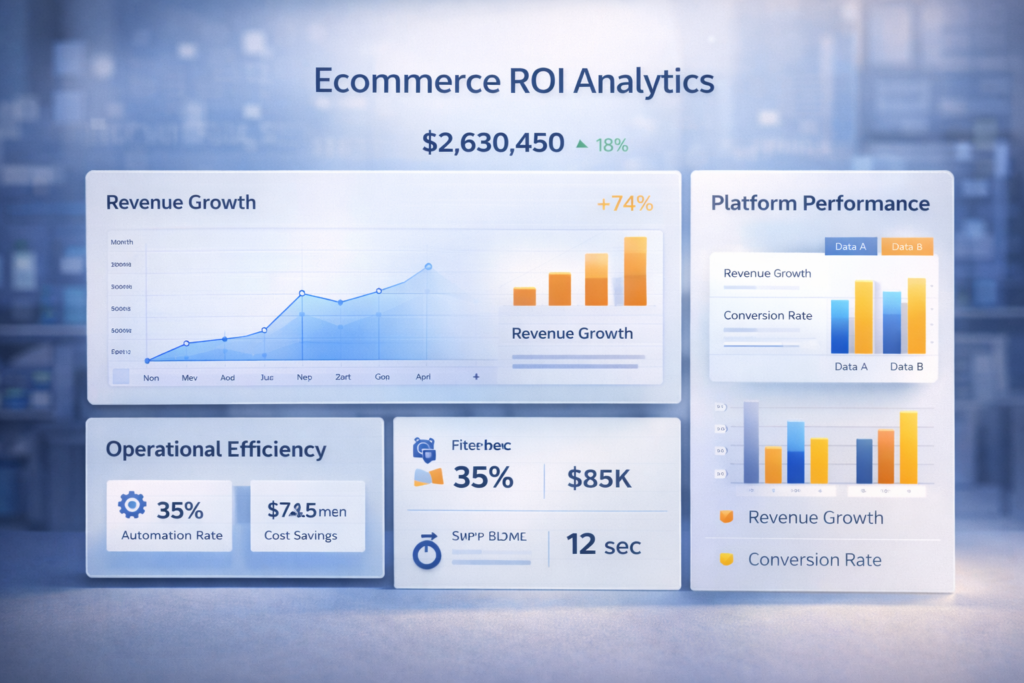
How to Calculate ROI from Commerce Cloud Pricing
Understanding ROI ensures better investment decisions.
H3: Revenue Growth
Improved conversions and scalability.
H3: Operational Efficiency
Reduced IT maintenance and downtime.
H3: Customer Experience
Faster performance improves retention.
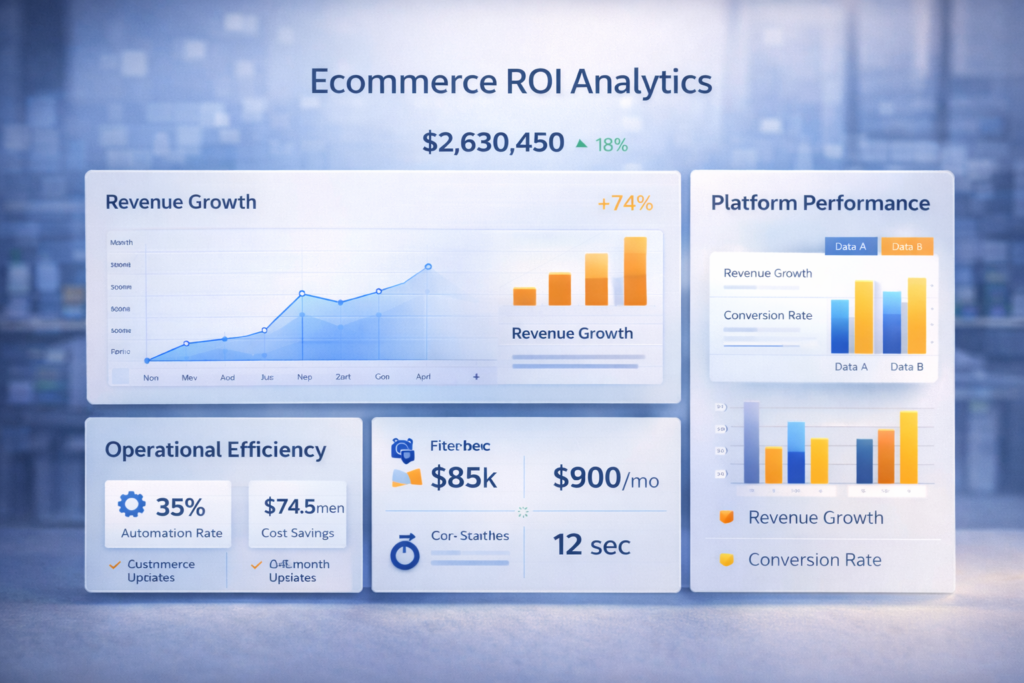
How to Calculate ROI from Commerce Cloud Pricing
Tips to Optimize Commerce Cloud Cost
Understanding ROI ensures better investment decisions.
H3: Revenue Growth
Improved conversions and scalability.
H3: Operational Efficiency
Reduced IT maintenance and downtime.
H3: Customer Experience
Faster performance improves retention.
Negotiate long-term contractsChoose scalable pricing tiersMonitor usage analyticsReduce unused add-onsAutomate marketing processes
Is Commerce Cloud Pricing Worth It?
For scalable ecommerce growth, cloud ecommerce platform pricing delivers high ROI despite higher upfront costs.
🎯 CONCLUSION
Understanding Commerce Cloud pricing allows businesses to choose the right ecommerce cloud platform with confidence. By analyzing pricing models, vendor options, hidden costs, and ROI potential, organizations can maximize profitability and long-term success.